Alexander Radulov’s time with the Dallas Stars can best be described as a beautiful, confusing fever dream—one where elite hockey talent, chaotic energy, and a complete disregard for emotional regulation all coexisted in perfect harmony. If hockey teams were reality TV shows, Radulov wasn’t just a cast member; he was the producer who kept flipping tables to make sure no one got comfortable.
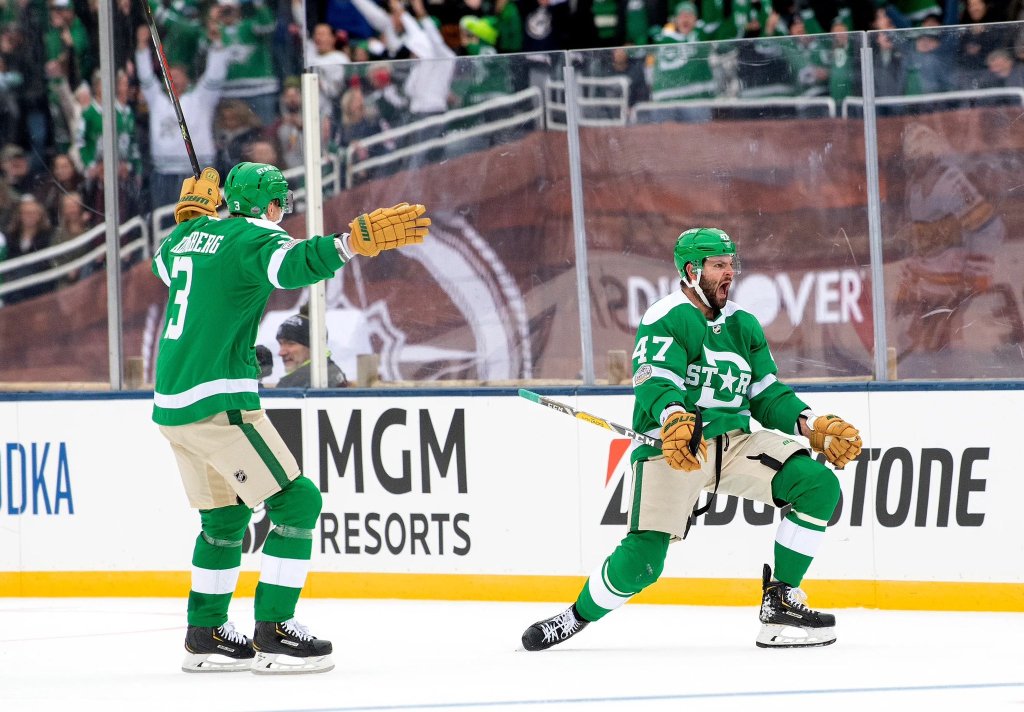
When Radulov arrived in Dallas in 2017, Stars fans didn’t quite know what to expect. They were told he was skilled. They were warned he was… intense. What they got was a man who celebrated goals like he had just won a custody battle, skated like he was constantly late for a flight, and played every shift as if someone had personally insulted his family lineage. He was electric, unhinged, and immediately beloved.
On the ice, Radulov was actually very good—annoyingly good. He put up points, bullied defenders, and formed real chemistry with Jamie Benn and Tyler Seguin, who often looked like two parents trying to keep their feral child from running into traffic. During the Stars’ 2020 Stanley Cup Final run, Radulov was everywhere: forechecking, chirping, celebrating, screaming at the bench, screaming at the refs, screaming at the concept of silence itself. If the NHL tracked “vibes per 60,” he would’ve led the league by a mile.
Off the ice—or at least in the penalty box—Radulov became a performance artist. He argued calls with refs like a lawyer who knew the judge was wrong and took penalties with the confidence of a man who fully believed consequences were optional. He smiled when he shouldn’t have. He yelled when he definitely shouldn’t have. He made facial expressions that looked like they were designed specifically to be turned into memes five years later.
And then, just as suddenly as he arrived, Radulov left. His final season in Dallas featured injuries, inconsistency, and the general sense that both player and team had reached the end of their shared tolerance level. The Stars moved on. Radulov went back to the KHL. Order was restored. Or so we thought.
Because once Radulov returned to the KHL, he didn’t just succeed—he thrived. Like a man released back into his natural habitat, he immediately began terrorizing opposing defenses, racking up points, and reminding everyone that yes, he is still extremely good at hockey when allowed to play with maximum chaos and minimal restraint. The KHL, a league already known for its “rules are more of a suggestion” energy, fits Radulov like a perfectly tailored suit made entirely of adrenaline.
After concluding his NHL career (including five seasons with the Dallas Stars), Alexander Radulov returned to the Kontinental Hockey League and quickly re-established himself as a dominant force. He signed with Ak Bars Kazan, where he continued to contribute at a high level before moving to Lokomotiv Yaroslavl for the 2024–25 season.
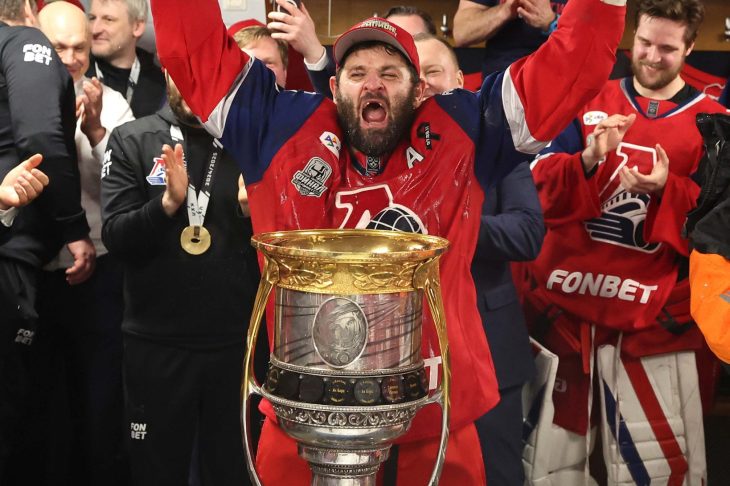
Radulov’s impact in the KHL has been significant: he helped Lokomotiv win the Gagarin Cup in 2025 and was named Playoff MVP, underscoring his ability to perform in critical moments even in his late 30s. He also reached major career milestones, becoming one of only a few players in league history to record 500 career assists, a testament to his longevity and playmaking excellence. Additionally, he signed a contract extension with Lokomotiv Yaroslavl through the 2026–27 season, indicating both his ongoing value to the club and his desire to continue at the top tier of professional hockey.
While Dallas now watches politely from afar, Radulov continues to dominate overseas, smiling that same mischievous smile that says, I am having fun, and someone is about to suffer for it. Stars fans don’t resent him—how could they? You don’t get mad at a thunderstorm for being loud. You just remember the damage it did and tell stories about it later.
Alexander Radulov’s legacy in Dallas isn’t measured solely in points or playoff runs. It’s measured in moments: the celebrations, the penalties, the chaos, the feeling that something absolutely insane might happen every time he touched the ice. And while he may now be lighting up the KHL, a small, unhinged part of him will always belong to Dallas—probably still arguing with a referee somewhere in the AAC.

 The Morning Skate