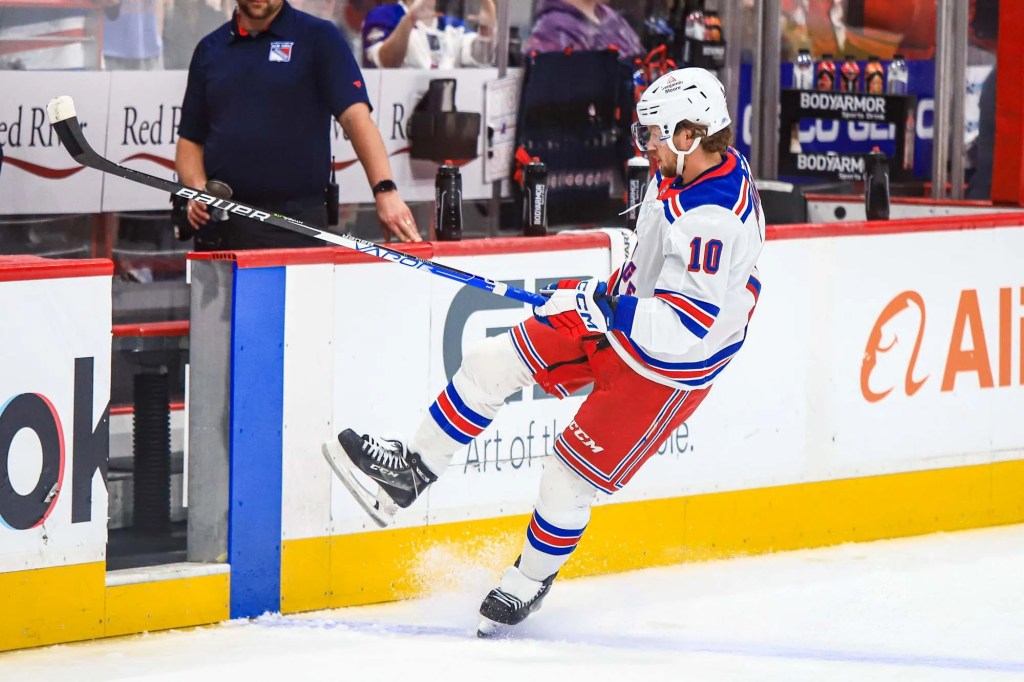
Before we dive headfirst into spreadsheets, cap gymnastics, and the emotional trauma that comes with trading anyone wearing or looking to be wearing Victory Green, let’s acknowledge one simple truth: anytime Artemi Panarin’s name appears in hypothetical trade talks, half the NHL fanbase grabs a calculator, the other half grabs a panic button, and salary cap experts suddenly start speaking in ancient financial runes. The idea of the Dallas Stars acquiring Panarin isn’t your typical “throw three prospects and a gently used Zamboni driver at New York and call it a day” scenario. This is a high-stakes, cap-squeezing, asset-juggling exercise that requires equal parts hockey analytics, contract law, and the Stars’ front office whispering, “Okay… but how do we keep Jason Robertson happy while doing this?”
Per Frank Seravalli, “I’ve heard a lot of players tell me in the last 48 hours that the whisper in the NHL dressing rooms is Panarin wants to play in Dallas; I’ve asked around, no confirmation.”
Whether or not there is confirmation, because as we learned in one of, if not the greatest hockey movie of all time, Mystery, Alaska “What you say in the room STAY in the room” there is still reason to speculate Jim Nill making multiple calls to the Rangers front office to see just what it would take to bring the Bread Man to Dallas.
Let’s take a look at what some of those phone calls could look like if Nill looks to make another big splash heading into the NHL Trade Deadline.
Trade Package #1 — Core Rental Package
Dallas Receives:
Artemi Panarin
New York Receives:
- Draft Picks: 2026 1st-Round Pick + 2027 2nd-Round Pick (EDIT: 2026 1st-Round Pick looks to be controlled by Carolina due to Rantanen trade. Stars could use 2027 1st-Round Pick in its place.)
- Prospect: High-end forward prospect (e.g., Mavrik Bourque, not technically a prospect but a younger offensive weapon, Cameron Schmidt, Emil Hemming)
Rationale:
- Dallas gives up future assets (picks and a prospect) rather than roster players with long-term value to New York. This aligns with the idea of Panarin as a rental, rather than a cornerstone Dallas is building around.
- The Rangers receive future draft capital and a young asset to aid in their retooling; since Panarin departs at year’s end, Dallas won’t offer a long-term contract in this scenario. (Or any, quite frankly.)
- This preserves Dallas’ core — including Robertson for this year and beyond — while acquiring high-end scoring.
Cap Fit Considerations:
- Dallas will likely need partial salary retention from the Rangers to absorb Panarin’s cap hit; New York could retain a portion to make the contract feasible under Dallas’ projected cap circumstances.
Trade Package #2 — Depth Conversion + Picks
Dallas Receives:
Artemi Panarin
New York Receives:
- Mid-Level NHL Forward(s): Players with term and modest cap hits who can help NYR without major cap strain (e.g., Sam Steel, Colin Blackwell, Radek Faksa, Oskar Back).
- 2026 1st-Round Pick
- 2027 3rd-Round Pick
Rationale:
- Instead of giving up a top prospect, Dallas moves middle-tier roster players whose replacements could be younger internal options or affordable free agents.
- New York gains immediate NHL contributors, picks, and potentially expanded roster flexibility.
- Dallas preserves Robertson and top defensive pieces while still adding Panarin’s elite playmaking for a Cup push.
Cap Fit Considerations:
- Matching NYR’s incoming cap could be eased by including non-essential roster players with moderate cap charges, allowing Dallas to take Panarin without exceeding limits. Dallas must remain cap compliant while maintaining roster balance.

Trade Package #3 — Hybrid Rental + Conditional Return
Dallas Receives:
Artemi Panarin
New York Receives:
- 2026 2nd-Round Pick (Conditional): Becomes a 1st if Dallas reaches Conference Final
- 2027 2nd-Round Pick
- Prospect or Young Player with Upside
Rationale:
- Conditional picks mitigate risk for Dallas: if Panarin’s addition triggers deep playoff success, the Rangers receive greater compensation.
- This structure reflects Panarin’s rental status and performance-based valuation rather than paying a premium for long-term value.
Cap Fit Considerations:
- This trade is designed to limit the upfront asset cost and match cap constraints more flexibly via performance contingencies.
Cap, Term, and Competitive Logic
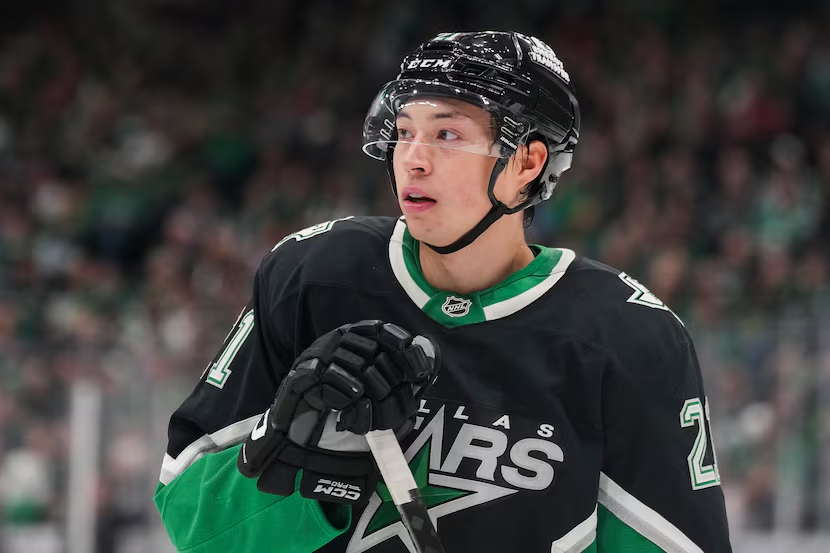
Why Not Trade Robertson?
- Robertson’s contract (cap hit $7.75 M) makes him valuable but not immovable, yet trading him would compromise Dallas’ long-term offensive core and contradict the goal of re-signing him post-2025-26.
- Keeping Robertson preserves a top-six forward who is part of Dallas’ future, while Panarin’s value in a rental scenario is purely a short-term scoring boost.
- (This is purely speculative and in no way reflects that the Stars SHOULD trade Robertson, but for the sake of the cap, sports science, and pure speculation.)
Why Draft Picks & Prospects Matter More Than Current Roster Pieces?
- Rangers, in “retool” mode, value picks and prospects more than rentals when they cannot extend Panarin.
- Dallas, by offering premium future assets instead of established roster players, protects its winning window beyond 2025-26.
Cap Reality:
- To take on Panarin’s cap, flexibility is required. Dallas has historically managed tight cap situations (e.g., trading Mason Marchment in summer 2025 to manage space after signing Rantanen).
- Targeted roster moves could (and realistically should) include retention agreements, moving smaller contracts, or short–term minor moves to stay compliant.
Roster Impacts and Playoff Outlook
Dallas’ Offense with Panarin:
- Panarin steps into a top-six role alongside elite scorers like Roope Hintz and Jason Robertson, creating an elite scoring trio capable of driving a deep playoff run.
- This acquisition enhances playmaking on the power play and increases overall scoring depth.
New York’s Returns:
- Adds draft capital and future assets, aligning with a potential long-term competitive rebuild or retool strategy rather than contending around an expiring Panarin.
A Logical, Cap-Aware Rental Deal
If the Stars pursue Panarin as a rental for a Stanley Cup push without surrendering Robertson, the realistic trade framework involves premium draft picks, a young prospect, and potentially middle-tier roster pieces. Salary cap mitigation — likely through partial retention — will be necessary. Such packages align with asset valuation theory: high short-term impact for Dallas, balanced with future value for New York.
All this being said, to mirror one of my favorite Texas Rangers writers growing up, Jamey Newberg, take it all with a grain of salt.

 The Morning Skate